
Safety Starts With You
Bike Safety
Ride smart, stay visible, and follow the rules of the road to keep yourself and others safe.


Bicycling is a great way to stay active and enjoy time with family. However, when a crash occurs between a motor vehicle and a bicycle, the cyclist is at a much higher risk of injury. Below, you’ll find important bicycle safety tips, Illinois rules of the road, and guidance on properly fitting a helmet. When both motorists and cyclists follow the rules and remain alert, many crashes and injuries can be prevented.
Bike Safety Tips
- Wear a helmet.
- Make sure bicycle is in good working order before riding. Check brakes, chain, and tire pressure.
- Ride in safe areas like a bike path, bike lane, or sidewalk (if permitted). If riding on the road, ride right. Ride WITH the flow of traffic.
- Ride One to a Bike — Ride one to a bike unless it is specifically designed to carry additional passengers or cargo. A bike is harder to balance with another person on it.
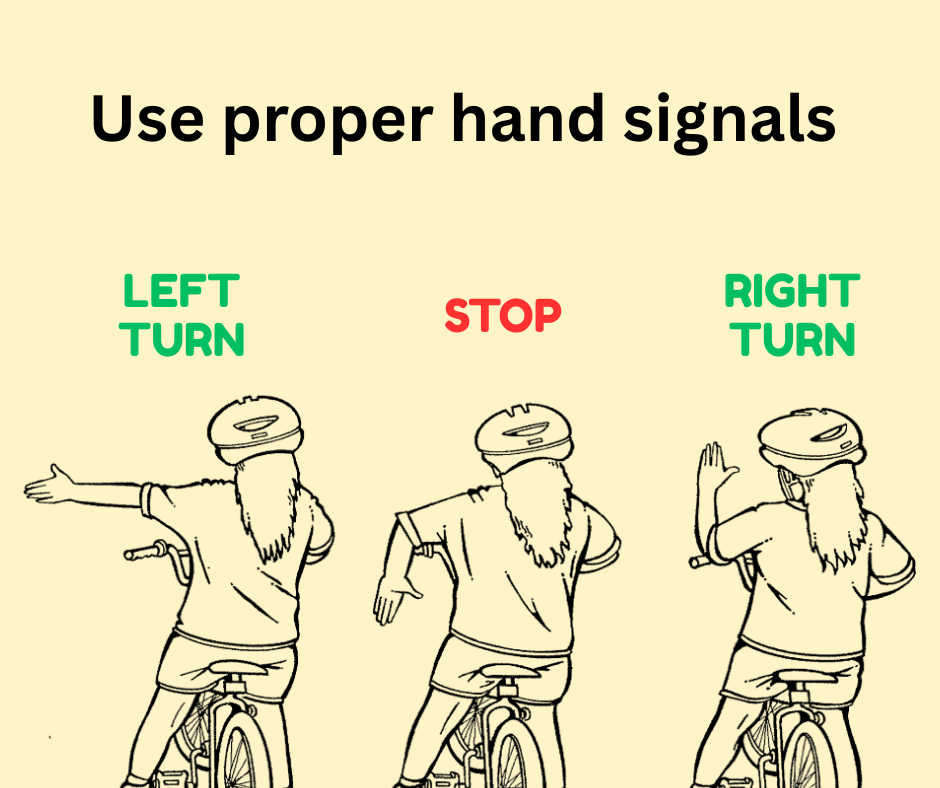
- Follow the rules of the road when riding on the road. You must obey all traffic signals and signs.
- Never wear headphones when bicycling. They block other sounds you need to hear.
- Always carry identification with you in case of a crash
- Don’t ride distracted. Keep your phone in your pocket.
- If you ride in the street at night, be sure to have the proper equipment on your bike, i.e., headlight, tail light, and reflectors.
Why Wear a Helmet?
Wearing a helmet on a pedal bicycle or an e-bike is essential to preventing a severe traumatic brain injury. Helmets are the best defense for preventing serious head injuries, lifelong disabilities, and even death when riding a bike of any kind. While you might be an experienced rider, the people and cars around you are not necessarily paying attention, adding an extra layer of danger when you are on two wheels. A helmet is hard on the outside to absorb the impact of the crash and soft on the inside to protect your head.
For more information on keeping your brain safe while bicycling, visit the Brain Injury Institute of America.
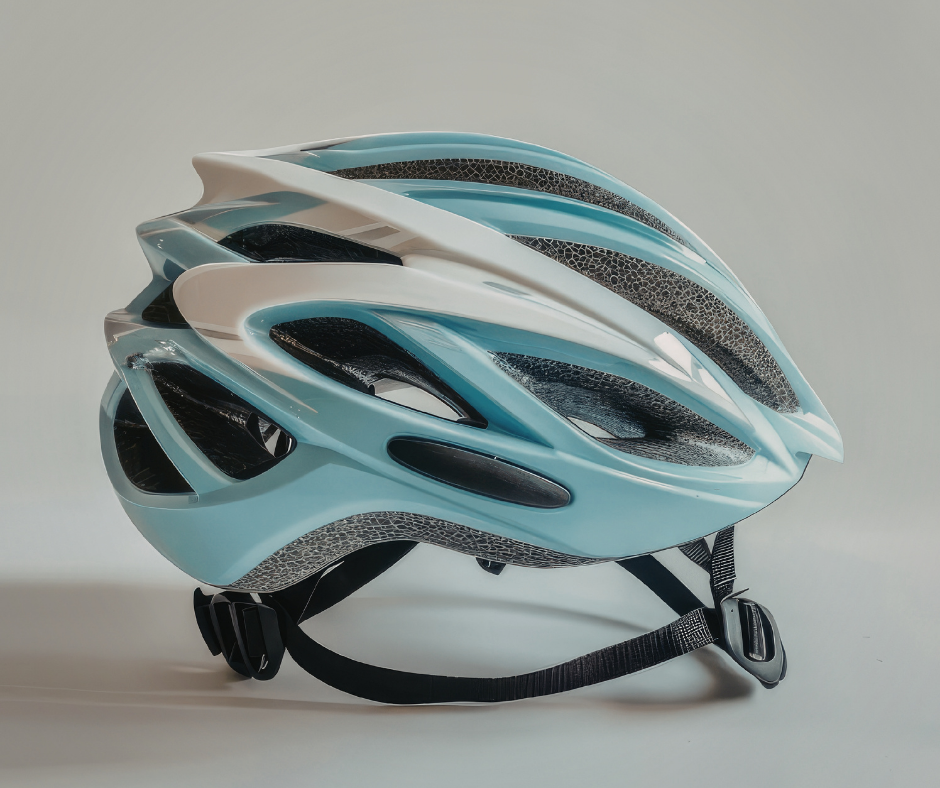
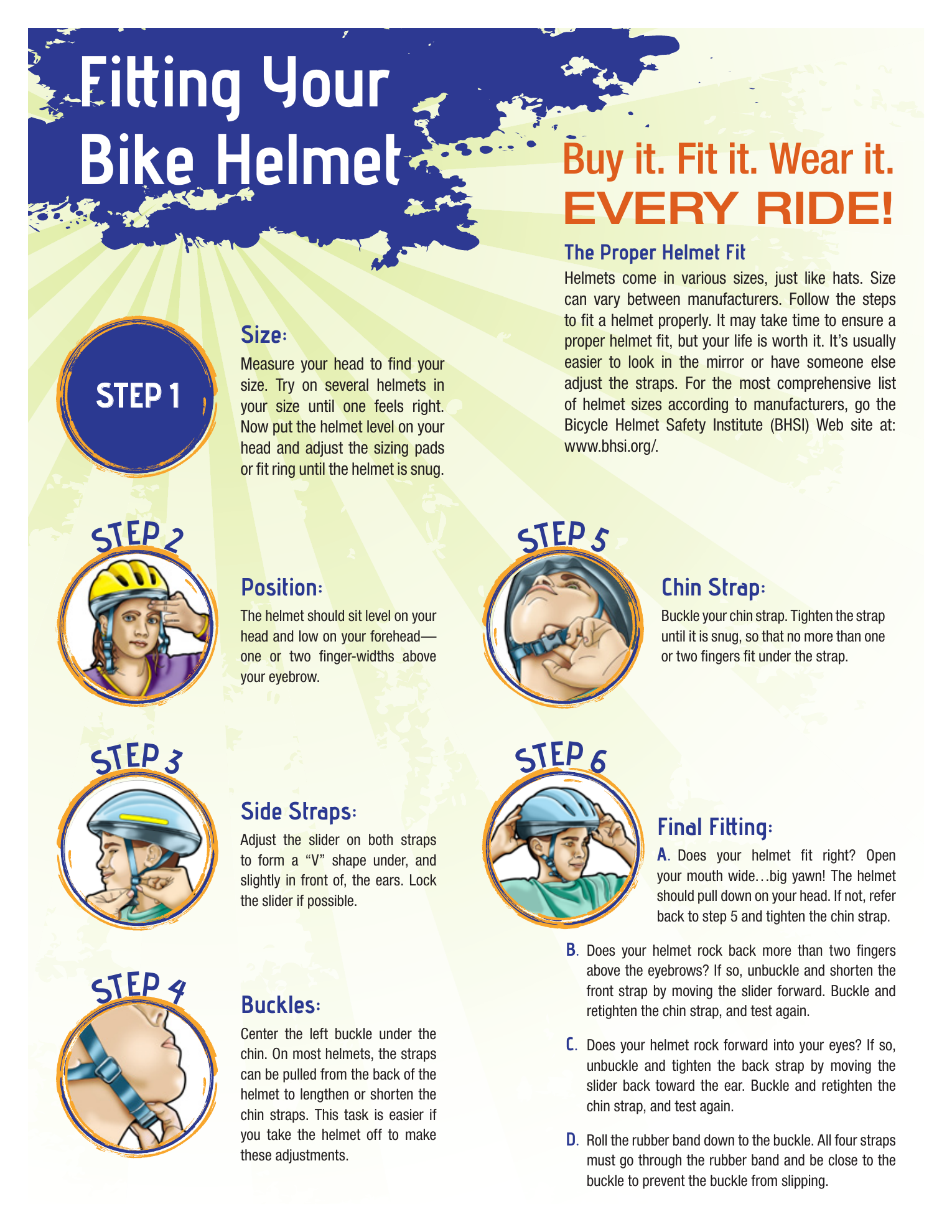
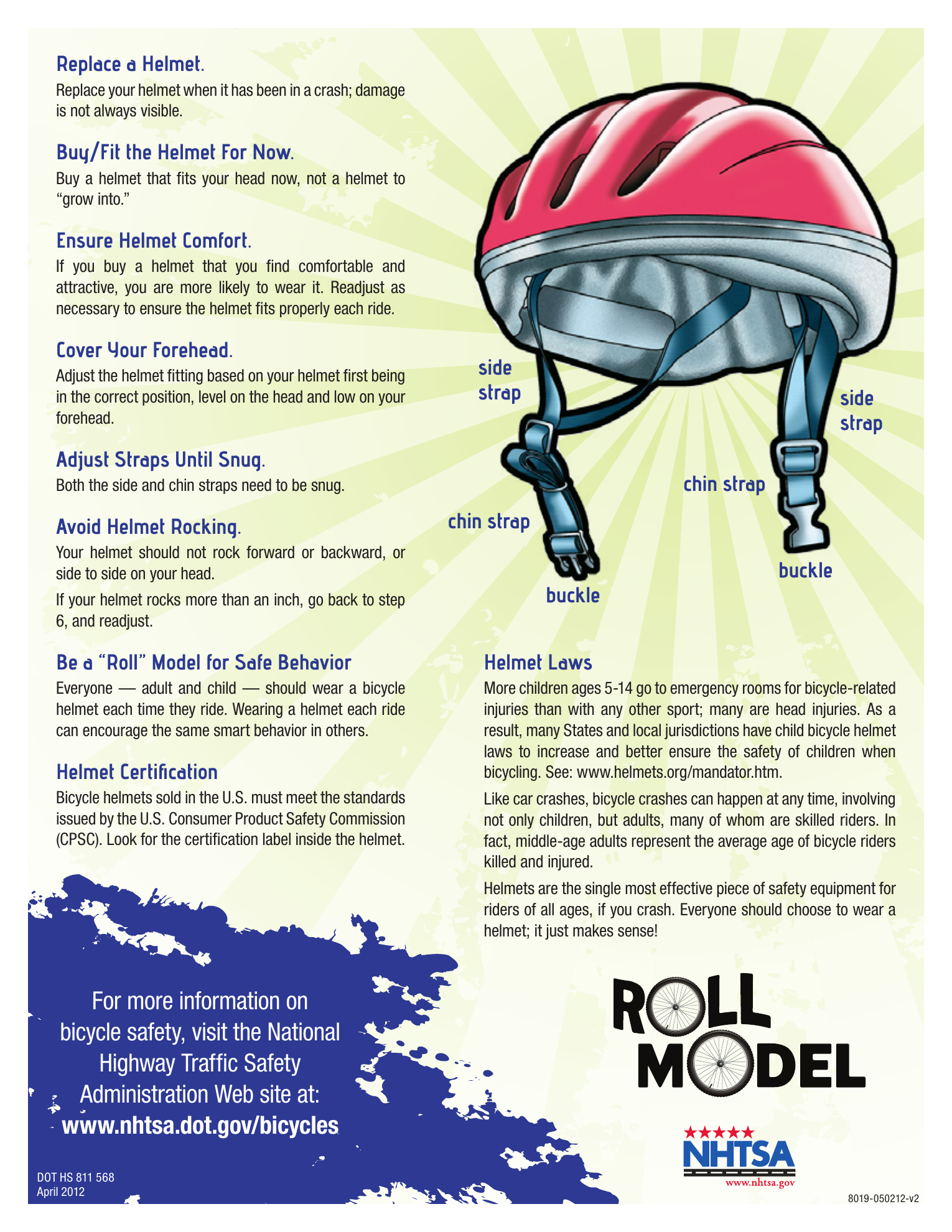
How to Properly Fit a Helmet?
There are a couple, but important steps to making sure a helmet fits properly. See images below.
To download the printable version of the images, click here.
Illinois Bicycle Rules of the Road
For the comple Bicycle Rules of the Road, click here.
See also, Illinois Vehicle Code – 625 ILCS 5/11-1501 thru 625 ILCS 5/11-1516
Parental Responsibility: Be a good "Roll" model
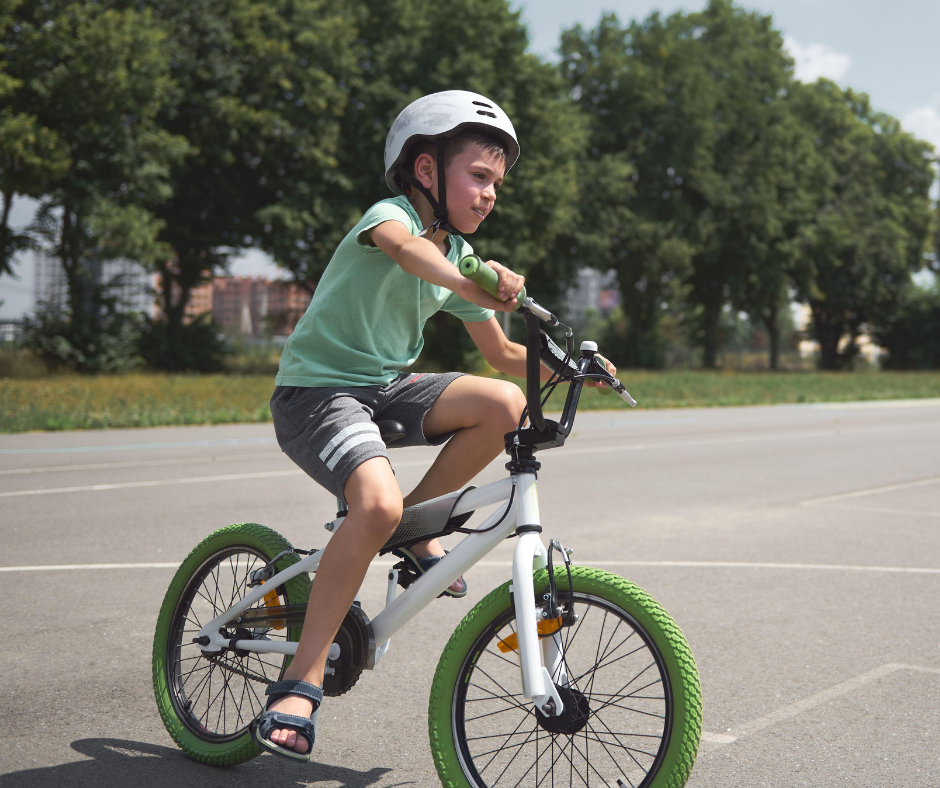
Parents and guardians should be aware of their responsibilities when their children ride bikes or walk near streets or highways. These responsibilities range from selecting the proper equipment for the child to wear to teaching the child all traffic laws. Since children perceive traffic situations differently than adults, it is important for parents or guardians to teach children the dangers of traffic. Set a good example by wearing a helmet and following the rules, too. With proper training, bicycling can be a safe, healthy, and fun activity for the whole family.
Resources
Bicycle Trails
rideillinois.org/maps
traillink.com
enjoyillinois.com/things-to-do/outdoor-recreation/biking/
Illinois Department of Transportation
Bike Safety
National Highway Traffic Safety Administration
Illinois Secretary of State
US Centers for Disease Control and Prevention
Safe Kids Worldwide
Brain Injury Association of America
Download Safety Brochures
Minooka Fire District: Bicycle Safety Rule to Protect Your Child
*All links on this page open up in a new tab