Safety Starts With You
E-Bikes, E-Scooters, & Golf Cart Safety
Whether you’re riding an e-bike, e-scooter, or golf cart, following basic safety practices helps prevent crashes, reduces fire risks from batteries, and keeps everyone on the road and paths safe.
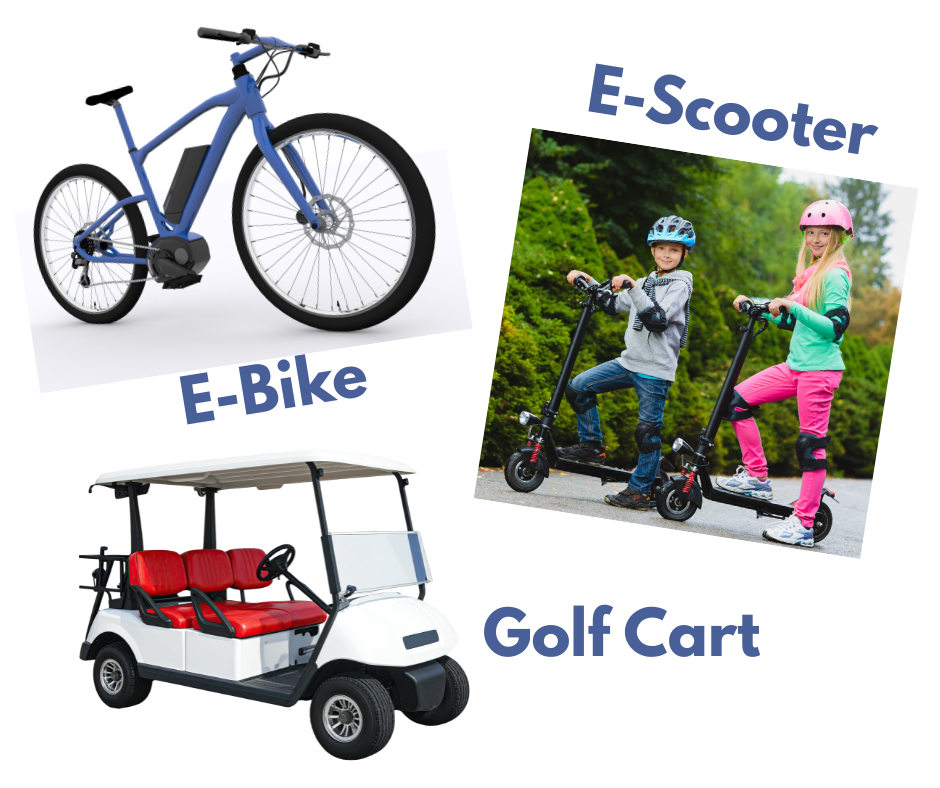
E-bikes, e-scooters, and golf carts are convenient and fun ways to get around, but they also require responsible operation to prevent injuries and fires. Riders should always follow local laws, wear appropriate safety gear like helmets, and stay alert to their surroundings, especially when sharing roads and paths with pedestrians and vehicles. Proper maintenance and safe charging of batteries are essential to reduce fire risks, and operators should avoid distractions, excessive speeds, and unsafe riding behaviors. By using these devices safely and respectfully, everyone can help keep their community roads and pathways safe.
Electric Bicycles: Rules and Safety Tips
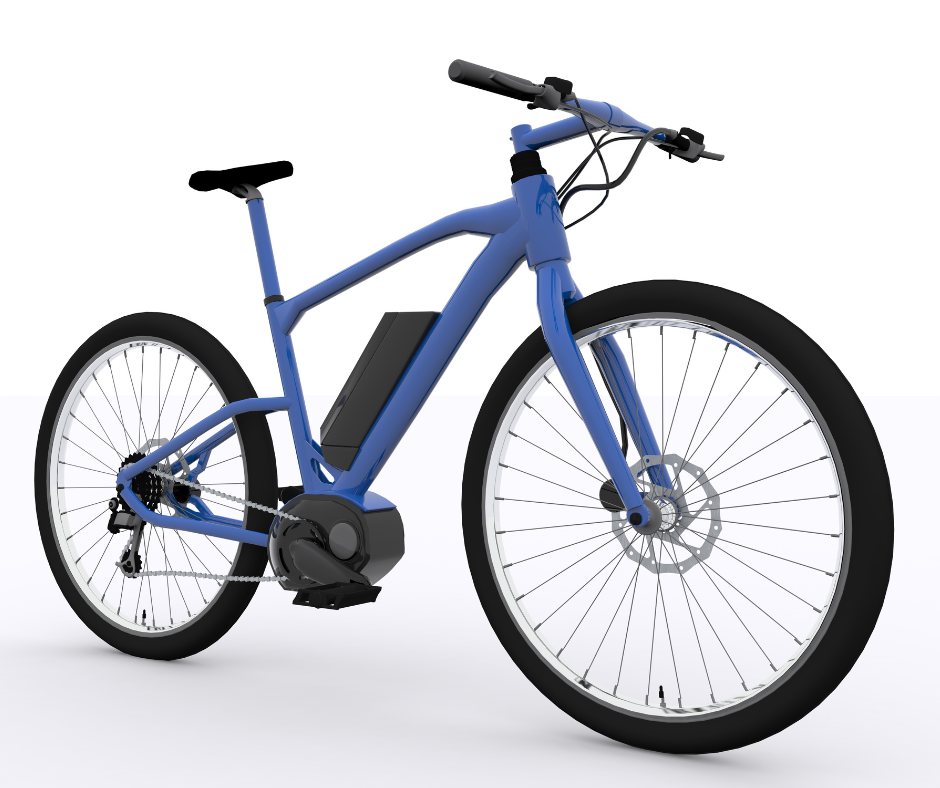
Illinois has implemented a three-class electric assist bicycle system (e-bikes). All e-bikes operating in Illinois must comply with equipment and manufacturing requirements adopted by the U.S. Consumer Products Safety Commission. You may operate an e-bike on any highway, street, or roadway authorized for use by bicycles including, but not limited to, bicycle lanes. You may operate an e-bike upon any bicycle path unless the municipality, county, or local authority with jurisdiction prohibits using e-bikes or a specific class of e-bike on the path. You may not operate an e-bike on sidewalks. The three classes of e-bikes in Illinois are as follows:
Class 1 e-bike – Low-speed electric bicycle equipped with a motor that provides assistance only when the rider is pedaling and ceases to provide assistance when the bicycle reaches speeds of 20 mph.
Class 2 e-bike – Low-speed electric bicycle equipped with a motor that can be used exclusively to propel the bicycle and cannot provide assistance when the bicycle reaches speeds of 20 mph.
Class 3 e-bike – Low-speed electric bicycle equipped with a motor that provides assistance only when the rider is pedaling and ceases to provide assistance when the bicycle reaches a speed of 28 mph.
No riding on sidewalks, riding on streets/bike lanes only, obeying all bicycle traffic laws, and a minimum age of 16 for Class 3 (28 mph) bikes.
In Illinois, there are no particular rules requiring helmets when riding an electric bike. Safety comes first, so it is still advisable to wear a helmet during riding to avoid potential injuries caused by falls.
Licensing, Registration, and Insurance
Ebike riders in Illinois do not need a driver’s license or registration for their Ebikes. Insurance is not required but recommended, particularly for Class 3 Ebikes due to their high speed and potential liability in case of an accident.
Labeling
Illinois requires Ebikes to have a visible label indicating the bike’s class (Class 1, 2, or 3), top-assisted speed, and motor wattage. This helps law enforcement and other riders understand the capabilities of each Ebike.
Key Safety Practices
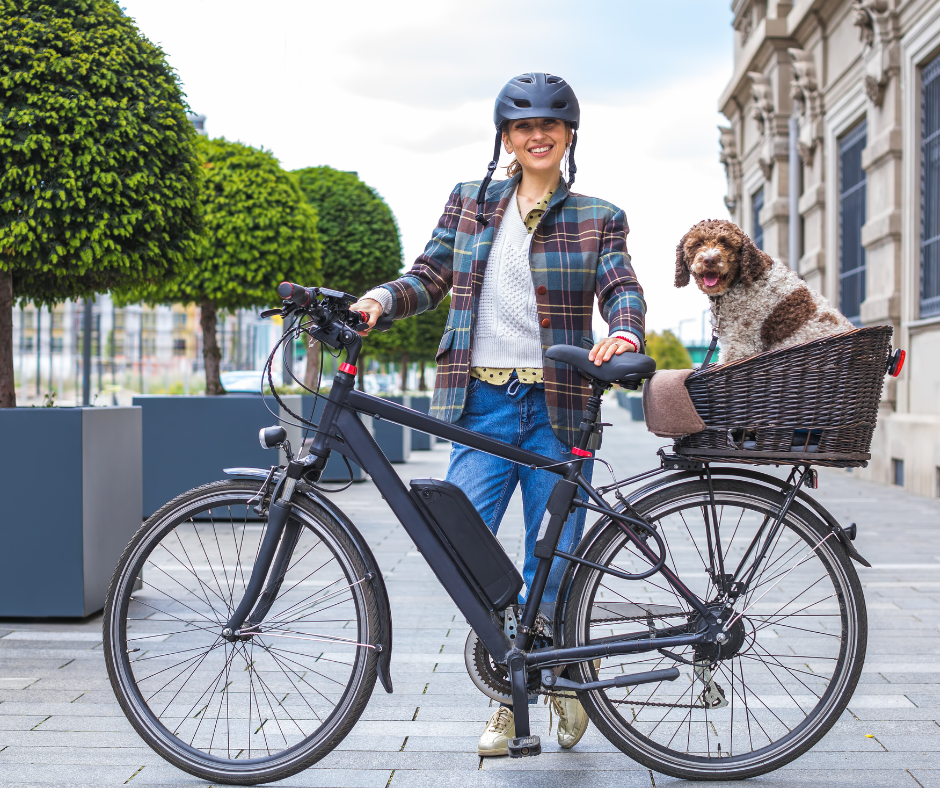
Wear a Helmet: Crucial for protecting against head injuries, with helmets specifically for high-speed e-bikes (e.g., Dutch NTA 8776) recommended.
Be Visible: Use front white lights and rear red lights/reflectors, even during the day, and wear bright or reflective clothing.
Obey Traffic Laws: E-bikes are generally treated as vehicles; stop at red lights, obey stop signs, and ride with traffic.
Practice Riding: E-bikes are heavier and accelerate faster. Practice in a parking lot to get used to the power and braking distance.
Maintain Your Bike: Check tire pressure, brakes (ensure they are not “spongy”), and battery levels before every ride.
Respect Pedestrians: Yield to pedestrians and use a bell or voice to announce your approach – yell out “On your left!”
Ride One to a Bike: Ride one to a bike unless it is specifically designed to carry additional passengers or cargo. A bike is harder to balance with another person on it.
For information on how to properly charge your e-bike, visit our Lithium-Ion Battery Safety page.
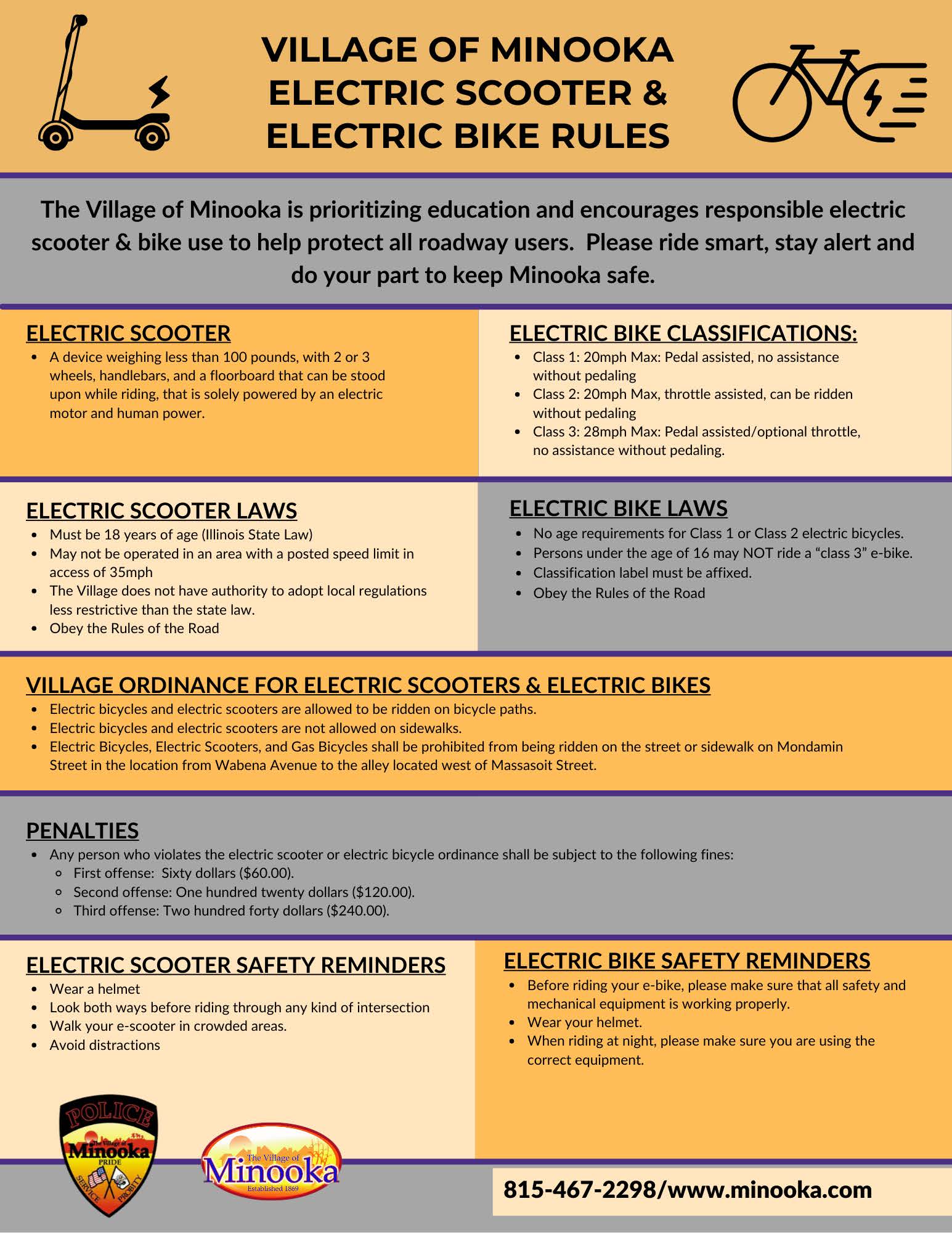
Village of Minooka Rules
E-bikes & E-scooters
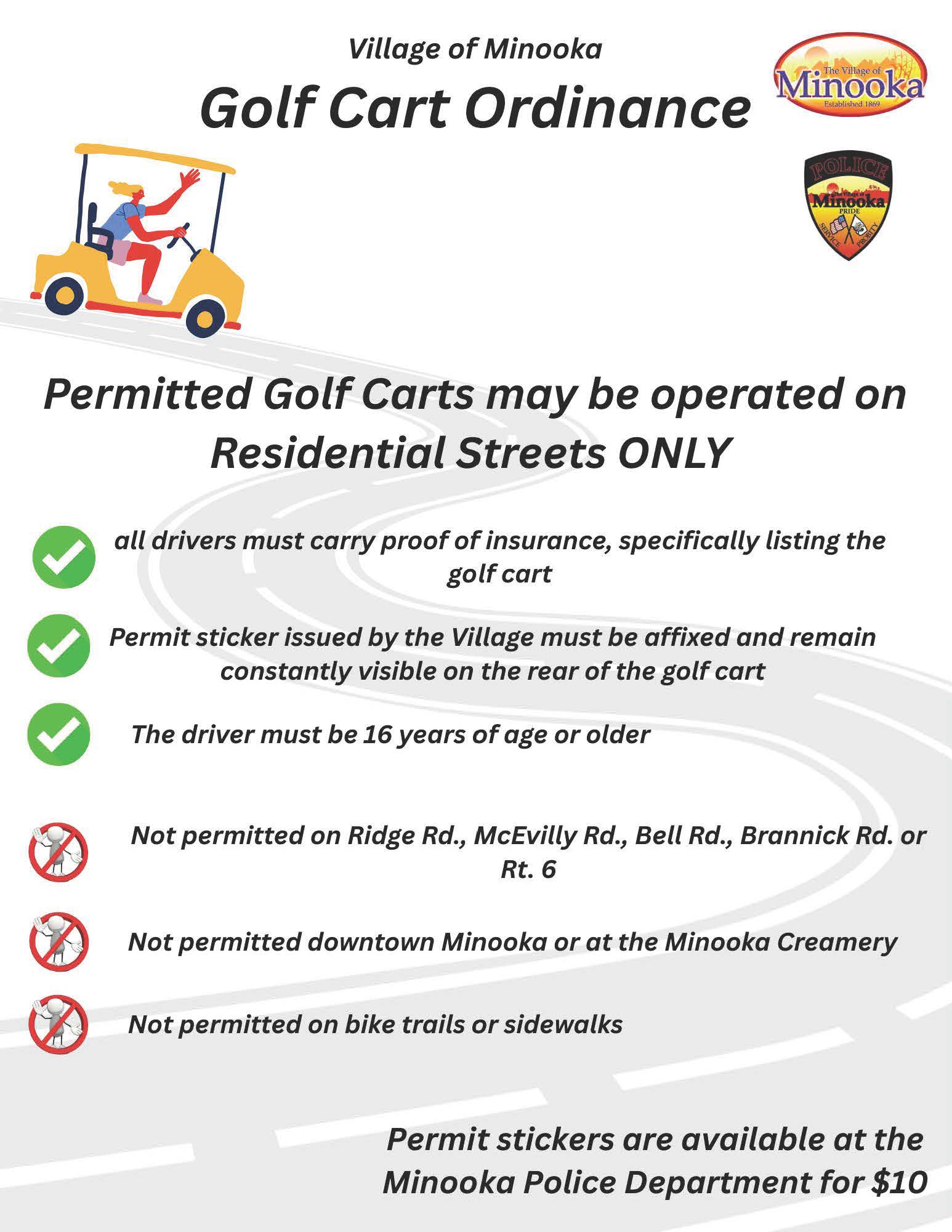
Golf Carts
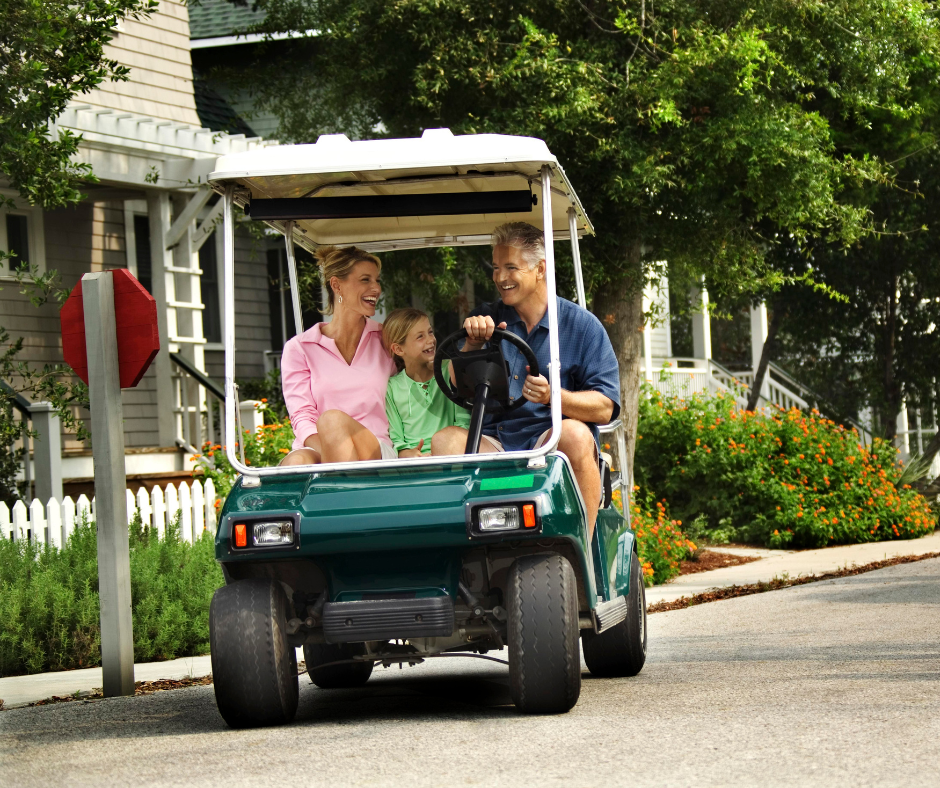
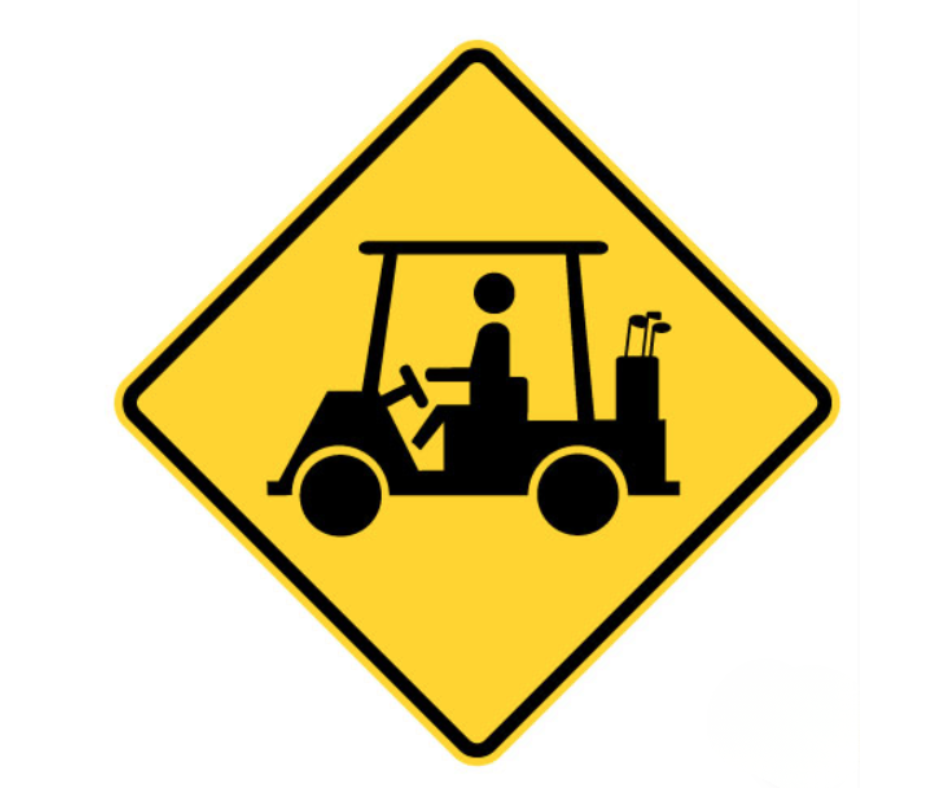
Golf Cart Safety Tips
- Always wear seat belts if your cart is equipped with them.
- Only carry as many passengers as there are seats—no standing or riding on the back.
- Keep all hands, arms, and legs inside the cart while it’s moving.
- Drive at a safe speed and slow down when turning to prevent tipping.
- Obey all local traffic laws and only drive on approved roads or paths.
- Yield to pedestrians and cyclists at all times.
- Never allow children to drive unless permitted and supervised.
- Avoid distractions like phones or loud music while driving.
- Do not drive under the influence of alcohol or drugs.
- Use lights and reflectors at night and stay visible to others.
- Cross streets carefully—look both ways and yield to vehicles.
- Park safely by setting the brake and turning the cart off.
Illinois State Law
Electric Scooters: Rules and Safety Tips
Key Safety Practices
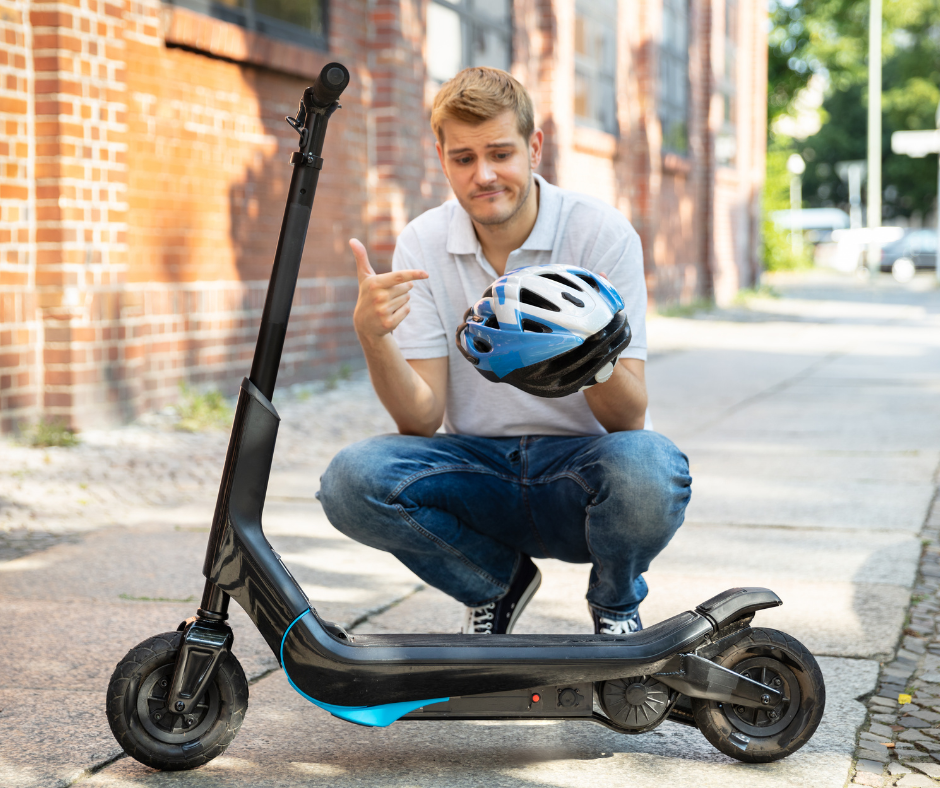
Wear a Helmet: Crucial for protecting against head injuries.
Be Visible: Use front white lights and rear red lights/reflectors, even during the day, and wear bright or reflective clothing.
Obey Traffic Laws: E-scooters are generally treated as vehicles; stop at red lights, obey stop signs, and ride with traffic.
Respect Pedestrians: Yield to pedestrians.
Ride One to a Scooter: A person may not use a low-speed electric scooter to carry more than one person at a time (State Law). It is hard to balance with another person on it.
Maintenance: Keep your low-speed electric scooter well-maintained and in good operating condition. For information on how to properly charge your e-scooter, visit our Lithium-Ion Battery Safety page.
Age: A person may not operate a low-speed electric scooter unless he or she is 18 years of age or older. (State Law)
Illinois State Law for low-speed electric scooters
*All links on this page open up in a new tab.