
Serving with compassion. Supporting with purpose.
Fire Chaplain
Ever wondered…what does a Fire Chaplain do?
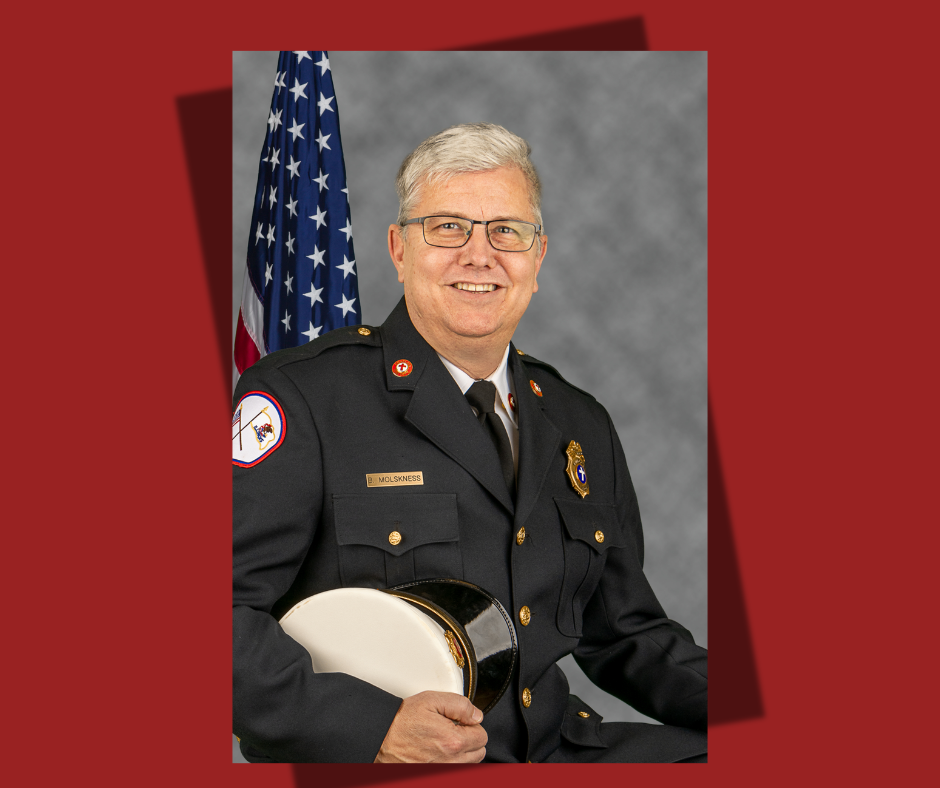
Meet Fire Chaplain Brent Molskness
We asked Chaplain Brent a few questions to help everyone understand what he does for the Minooka Fire Protection District.
What’s a misconception people have about what chaplains actually do?
I think there are two big misconceptions….First off, many see a chaplain’s role as only existing during a traumatic event and don’t realize a lot of a chaplain’s work is in the relationship building among the crews and in the community. Too often when someone hears that the chaplain has been called they immediately think, “Who died?” That’s normally not the case. Most often the chaplain is there to offer moral support, direction, and encouragement to both the fire crews and victims. The second misconception is that chaplains are just looking to preach to them. No, the role of a chaplain is to be a spiritual support but primarily to offer support and encouragement.
Are you on call? Do you ride along or respond to scenes?
As a volunteer, I am primarily on call. I do not sit at the station waiting for the next tone out, but rather I go about my life and my work as a pastor. From time to time, I will do an 8-12 hour ride along day with shifts; but normally I am simply on call.
What kinds of situations do you most commonly get called into?
I am called upon for a variety of situations, but the primary ones are house fires, DOAS, and tragic accidents. With house fires, I wait and watch with the victims helping them through the process of what is being done on the scene and their next steps in getting back on their feet. When called out for DOA’s I sit with the family while waiting for the coroner and offer comfort. For tragic accidents, I am called upon to keep family and friends away from the gruesome scene and help them process their initial grief there. In all of these situations, my role is to assist the victims so the firefighter/paramedics can focus their knowledge and resources on the scene at hand.
Outside of these scene operations, I may be called to the fire station to welcome back or sit with a crew that has experienced a traumatic scene. Often times in these situations, multiple chaplains may be called in so some are at the scene, others are with the victims’ family and friends, and some help support the team of firefighter/paramedics. At the station I will try to sit down with the team over a meal and just start asking questions about the event to help them talk and get the scene more out of them rather than keeping it in.
Did you have any personal connection to the fire service before this one?
No, I did not.
How do you support firefighters after a particularly traumatic call?
It varies depending on the situation and personnel…but one of the key things I try to do is get them to talk about what just happened, what they saw, what they experienced. One of the key ideas I’ve learned and experienced is that the more opportunities a first responder has to talk about trauma the less it sticks with them. It doesn’t mean it just goes away, but it helps alleviate some of the emotional stress one deals with in this line of work. The more one holds on to trauma and doesn’t talk about it, the more those calls damage the psyche and emotions of first responders. By asking questions and giving them time to talk, I believe I am helping them carry a lighter burden internally. This act of communication may happen around a truck on the scene, at a meal back at the station, or perhaps even in a more formal debriefing.
How do you serve members who aren’t religious?
For me this hasn’t even been something I think about when interacting with the firefighters. I see them all as firefighters, and I have been given the amazing honor and privilege to be their cheerleader and confidant. My role is to come alongside and be there as an encourager and helper for whoever I’m beside. I see my role not as proselytizing or being “the man of the cloth” around the fire station, but as being the one to listen, support, and encourage, regardless of one’s faith status.
How did firefighters initially respond to having a chaplain, and has that changed over time?
It was a little tough at the start, as firefighters are a tight knit group. I was seen as the outsider and since I was the first official chaplain, I think many thought I was coming in as a pastor to proselytize them. But over years of working scenes together and being around the stations often and doing ride alongs, the firefighters discovered I was there to help and assist. Trust is built over many years of service, and the relationship is much more connected. In fact, it has been great to be invited into many of their lives in different ways as “chappy.” I have wept with them at the loss of a family member, visited them or a family member in the hospital, and celebrated with them at weddings and other significant events.
What’s the hardest part of the job emotionally, and how do you take care of yourself?
Not knowing when or what the next call may be. Unlike the firefighters, I am not on shift when a call comes in. For me as a volunteer, I am going about my usual life at home or at work. This can take a toll at times, especially when many calls do not come at opportune times. As I get into my vehicle and head to the scene, I pray for God to give me what is needed to help the victims and the firefighters. And just like the firefighters, when I return from a traumatic call, I share what I experienced with my wife and close friends so I can get more of the trauma out than keep it inside.
What does the fire department need most right now that people outside the service don’t see?
As the Minooka area continues to grow and the number of daily calls increases for the department, the need for more qualified and called firefighters/paramedics is great. I’m amazed at the amount of overtime our people have to put in due to personnel shortages at times. Being a firefighter/paramedic is not just a job, I believe it is a calling. It’s a calling for certain people to not just look for a paycheck, but to make an impact for humanity by being there for others in crisis while everyone else goes the other way. Minooka has had a rich heritage of amazing men and women who have staffed our district over the years. I hope we will see many more young people look to the calling and career of being a firefighter/paramedic in these next few years to keep up with our community’s growth.
What would you want the public to understand about the mental and emotional toll on firefighters?
This type of job is a calling. If you lack the desire and patience to serve others, you won’t last long in the fire service. The whole job of a firefighter/paramedic is to help in difficult situations. No one calls 911 because they are having a good day, instead they call because they are in trouble. Firefighter/paramedics walk into work every day not knowing what, when, or where they may be called to that day. They see and experience things, so the rest of the community doesn’t have to. They go to the death of a child, and then after work, they have to go home to their own children. They see death on a regular basis, while the rest of the world tries to avoid it. They walk onto scenes that seem impossible and somehow try to bring help. They may be sleeping soundly, and in a moment’s notice they have to rush to a scene not half asleep but awake and ready. All of these examples and much more, give a glimpse into the strain and stress for members of the fire service. Because of the 24-hour duty shift schedule, their life rhythms become very different from most of those around them who work 8-10 hour shifts and then go home. The work of a firefighter/paramedic involves stepping into traumatic situations repeatedly day in and day out. It is a sacrifice, but I am so grateful for the men and women who do so to take care of their neighbors and community.
What does this community mean to you personally?
Regarding the fire service community, I have found this to be a very strong family that definitely looks out for its own. A few weeks ago, when storms knocked out power in our area, my home was without power for days. Once department personnel knew of that, they immediately started working on a plan to get me a generator set and to see if I needed anything else. Much like war veterans who have been in battle together, there is a bond to make sure to look out for each other.
As for our Minooka community, I am grateful to be part of it and to serve it. I am not from this area, but it is my wife’s hometown area. It has been great to give back to this community and invest in its future. I truly do count myself blessed to live and serve in the Minooka area as we continue to grow and adapt with that growth to being a growing community that still feels like a small town that looks after each other.
What drew you to become a chaplain, and specifically to serve firefighters?
Prior to serving as a fire chaplain, I worked as a chaplain with Baseball Chapel…serving the Joliet Jackhammers/Slammers for several years. I enjoyed the engagement with the players and helping them navigate life and faith. I also always found my rounds as a pastor over the years visiting hospitals or nursing homes very fulfilling. God made me with a big heart and my personality type is that of an encourager. While some people prefer to keep their distance, I desire to be closer and come alongside others.
As far as becoming a fire chaplain, it was never on my radar. It wasn’t until Chief Yancey put out a request to various pastors in the area that it was even brought to my attention. During this time, I discovered Chief Yancey attended our church and was my neighbor across the street. So we began to have more conversations and we connected well, which is a big thing for a chaplain and a chief. I gradually did some research and talked to other fire chaplains in the area, and finally said yes. It was great timing because Chief Yancey really wanted to develop the fire chaplaincy not just in our department but also in our MABAS District. So I was put on the fast track going to many training opportunities in the Chicagoland area and around the country to figure out how to start this role, develop it, and sustain it.
Chaplain Brent has recently celebrated 15 years of service at the Minooka Fire District. He is also the Executive Pastor at Mission Bible in Minooka.