Go Team!
College Campus Safety
Keep college students safe from on- and off-campus housing fires.
For many students, the last fire safety training they received was in grade school, but with new independence comes new responsibilities. Whether living on- or off-campus, college students should take a few minutes to make sure they are living in a fire-safe environment and understand the fire risks around them. Educating students on simple prevention actions they can take during the school year is important, often overlooked, and could ultimately save lives.

Did you know?
- Approximately 25% of all campus fire fatalities follow a party.
- February, September, October, and November were the peak months for fires in dormitory-type properties.
- From 2019 – 2023, U.S. fire departments responded to an estimated annual average of 3,231 structure fires in dormitories, fraternities, sororities, and other related properties. These fires caused annual averages of 3 civilian deaths, 19 civilian injuries, and $19 million in direct property damage.
- Approximately three out of four fires began in the kitchen or cooking area, accounting for 58 percent of the civilian injuries and 11 percent of the direct property damage. Cooking equipment was involved in nearly 8 out of 10 fires. Unattended equipment was the most common factor contributing to the ignition of these fires.
- Saturday and Sunday were the peak days for these fires. Fires that occurred on Saturdays accounted for the largest share of injuries.
- The peak time of day for these fires in dormitory-type properties was between 4 p.m. and midnight when over half of the fires occurred. Fires were least likely to occur between midnight and 8 a.m.
Source: NFPA Research
All “Learn More” buttons will open up in a new tab.
Lithium Ion Battery Safety
September signals back to school time and homework! Spread the word about lithium-ion battery safety; support our students by giving them the information they need to keep themselves and their computers, tablets, smartphones, and other devices safer during the academic year.


Cooking Safety:
E-bikes and E-scooters
E-bikes and e-scooters are a low-cost and environmentally friendly way of getting around college campuses. But there are also fire hazards associated with the lithium-ion batteries that power them. Help students stay safe, learning the proper way to use, store, and charge micromobility devices and lower the risk of fires.

Safety Tips for On- and Off-Campus Housing
When choosing on-campus or off-campus housing, college students should make fire safety a top priority. See It, Before You Sign It! We encourage parents to see the off-campus apartment or house where their student will be living before signing the lease. Check that the building has working smoke alarms, clearly marked exits, and accessible fire extinguishers. Ask about sprinkler systems and make sure windows and doors can open easily in case of an emergency. Students should also think about everyday safety habits, such as avoiding overloaded outlets, using approved cooking appliances, and following campus housing rules. Taking a few minutes to evaluate fire safety features can help protect lives and provide peace of mind throughout the school year.
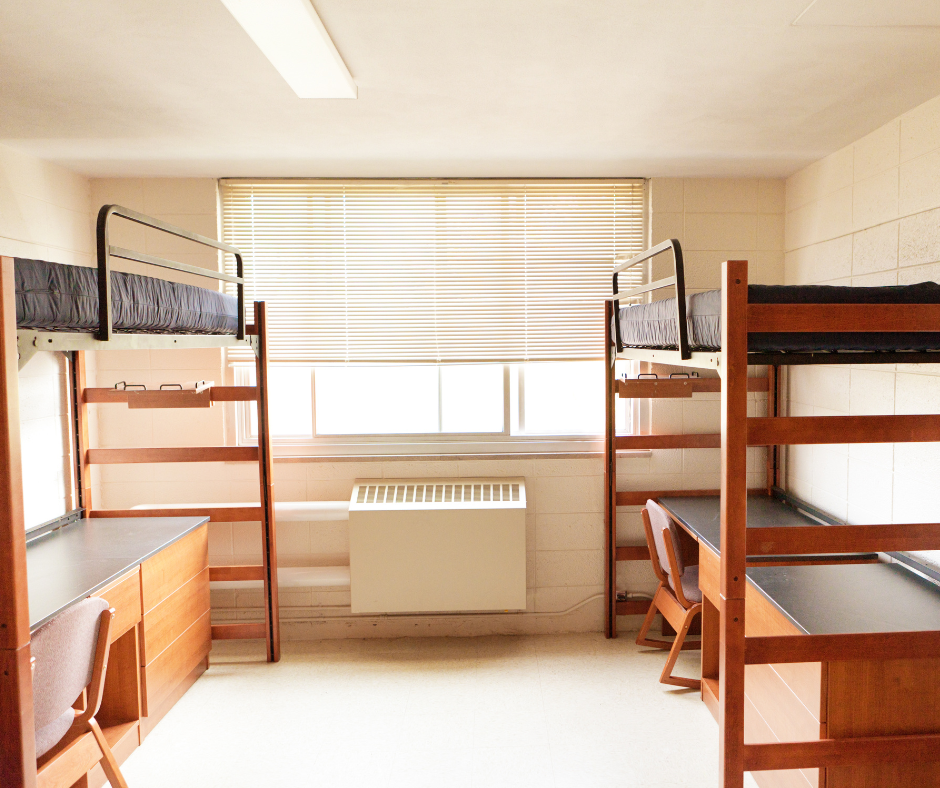
On-Campus Housing – Dorms
- One of the most important things students (and parents) should do, is read the college’s handbook to see what you can or cannot have in your dorm room.
- Never remove batteries or disable smoke alarms or carbon monoxide detectors.
- Do not overload electrial outlets.
- Do not cover lights/lamps with curtains, material, or tapestries.
- If your room has a sprinkler heads in the ceiling, do not hang anything from them or cover them up with material.
- If the fire alarm sounds, leave the building immediately and treat every alarm or drill as a real emergency.
- Do not prop open fire doors. They are designed to close when the alarms goes off to keep fires contained.
When visiting a school or choosing housing, make an informed decision. Ask these questions:
- How many fires have occurred on campus in the past year? How many in off-campus housing?
- Are on-campus residence halls, and off-campus housing equipped with an automatic fire sprinkler system? If not, why not?
- Does every student’s room have a smoke alarm and does it send a signal to campus security or to the fire department?
- How many false alarms have occurred in the residence halls?
- Is the fire department IMMEDIATELY notified whenever ANY fire alarm system is activated?
- What is the school’s disciplinary policy towards students that cause false alarms or fail to evacuate during an alarm?
- Does the school have policies that electrical appliances and power strips be certified as safe and reliable?
- Are smoking, candles, and halogen lamps prohibited in the residence halls?
- How much fire prevention training does the residence hall staff receive?
- How often do the students themselves receive fire prevention education?
- How often is fire evacuation drills conducted?
- Does the school provide fire extinguisher training for all students?
- Does the school provide CO detectors?
Off-Campus Housing – Fraternity/Sorority/Appartments/Rental Homes
- If you live in an apartment unit or house, make sure smoke alarms are installed in each sleeping room, outside every sleeping area, and on every level of the apartment unit or house. The landlord is responsible for installing/replacing smoke alarms. It is your responsiblity to maintain it.
- Know two ways out of every room and practice the escape plan with your roommates.
- Make sure all windows can be easily opened from the inside.
- Test all smoke alarms and carbon monoxide (CO) alarms at least monthly
- Never remove batteries or disable the smoke alarms or carbon monoxide (CO) alarms
- Keep Exits Clear. Do not block hallways, stairways, or fire escapes with furniture or trash.
- If a Fire Occurs, get out immediately, close doors behind you to contain the fire, and call 911.
- If Trapped, keep doors closed, seal cracks with cloth, and call 911 to report your location.